
Valencia Root Zone Calculation for TPZ Fencing: Compliance Guide
SCV Perimeter Rentals helps Valencia, CA contractors and property managers calculate the root zone and set compliant TPZ fencing for safer projects. We account for local conditions in Valencia Town Center, Bridgeport, and The Summit, where mature trees, 1980–2000 era development, and hot, dry weather increase root protection needs. Our guidance supports accurate CRZ layout, faster approvals, and clear fencing placement near commercial sites like Hyatt Regency Valencia.
Understanding Root Zone Protection in Tree-Sensitive Construction
When we're working on construction projects in Valencia, protecting tree root zones isn't just a best practice — it's critical infrastructure preservation. Our team specializes in creating precise tree protection zones that safeguard mature landscape assets during development. Trees represent significant environmental and property value, especially in established neighborhoods like Bridgeport where landscape maturity defines community character.
Calculation Steps
- Identify critical root radius for each tree species
- Mark protection boundaries with durable fencing
- Restrict equipment and material staging within root zones
- Monitor zone integrity throughout project duration
| Tree Size | Minimum Protection Radius |
|---|---|
| Small (0-10" diameter) | 5 feet |
| Medium (10-20" diameter) | 10 feet |
| Large (20-30" diameter) | 15 feet |
Root Zone Calculation for TPZ Fencing: Practical Compliance in Valencia, CA
Root Zone Calculation is a quantitative assessment method that establishes the mandatory protective radius around trees on construction sites. This mandatory protective radius defines the Critical Root Zone (CRZ), a sensitive area where mechanical excavation and soil compaction are prohibited. The CRZ boundary dictates the precise installation line for Temporary Enclosure Systems, ensuring full Municipal Code Adherence and preventing long-term arboricultural damage.
Key Terminology
- Tree Protection Zone (TPZ)
- A designated buffer area around a tree's root system that must remain undisturbed during construction or fencing installation to prevent damage and ensure tree health.
- Root Zone Calculation
- The process of measuring the radius around a tree trunk to determine where fencing or excavation must avoid to comply with local tree protection regulations.
- California Institute of the Arts (CalArts)
- A key landmark in Valencia, CA, where TPZ fencing compliance is regularly enforced during nearby construction to protect mature landscaping.
- SCV Perimeter Rentals
- Local fencing provider in Valencia specializing in temporary fencing solutions that meet TPZ compliance for neighborhoods like Bridgeport and Old Orchard.
- Valencia Neighborhoods
- Areas such as The Summit and Bridgeport where enforcing root zone fencing is critical due to mature trees and local municipal codes.
- Temporary Perimeter Fencing
- Modular fencing installed on construction sites to protect root zones, designed to accommodate uneven terrain common in Valencia’s 1980_2000-era developments.
In Simple Terms
Root zone calculation for TPZ fencing involves mapping the area around a tree’s trunk where roots extend, typically using the tree's diameter at breast height. In Valencia neighborhoods like Bridgeport and The Summit, regulations require fencing to be placed outside this zone to avoid root damage. SCV Perimeter Rentals installs fencing compliant with these measurements, especially near sensitive landmarks such as CalArts, ensuring construction projects protect established trees during site work.
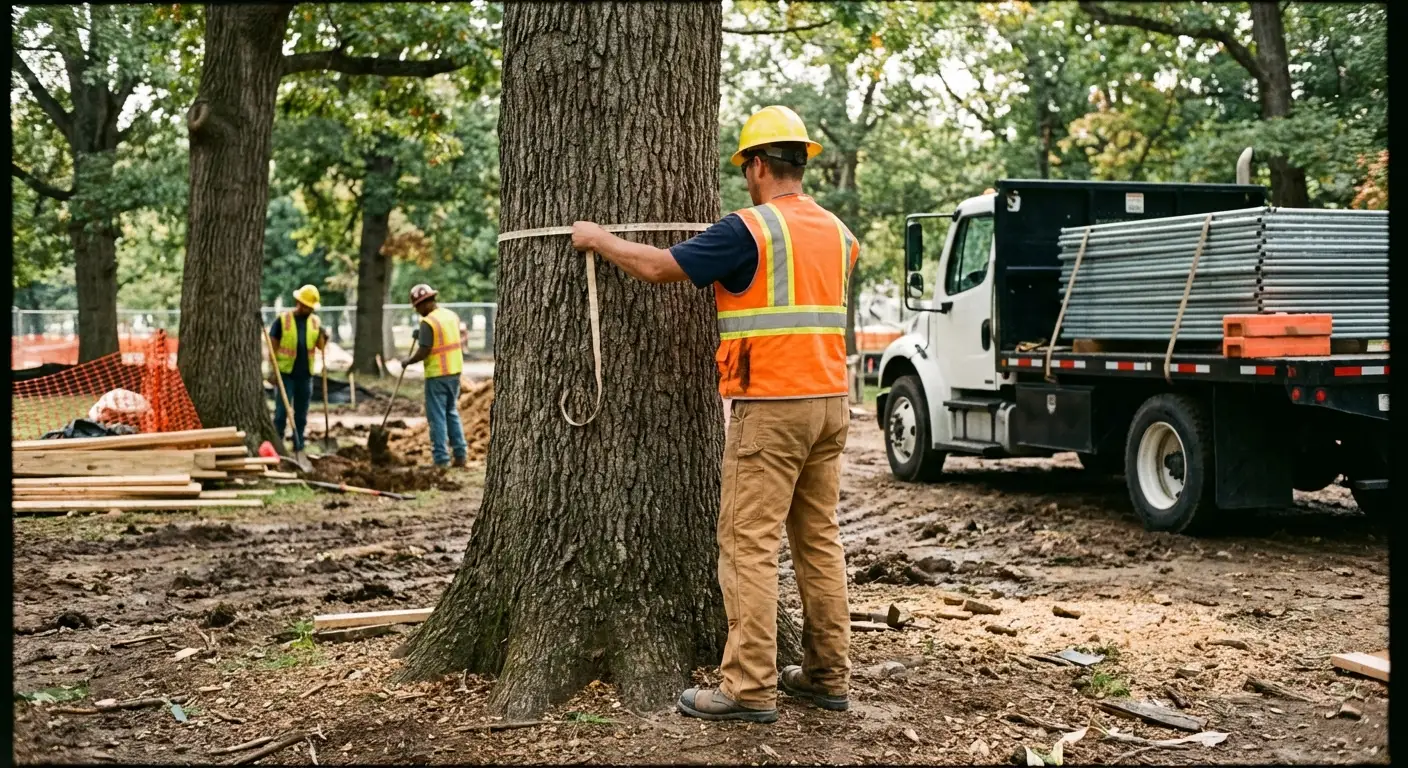
TPZ Fencing Compliance and Root Zone Specifications
Technical requirements for establishing Tree Protection Zones near Valencia Country Club landscapes to prevent root damage during construction activities.
| TPZ Radius Calculation Method | Critical Root Zone (CRZ) + Tree Protection Zone (TPZ) overlap |
|---|---|
| Fencing Installation Cost | $450-$750 per linear foot |
| Arborist Consultation Fee | $200-$400 per site visit |
| Temporary Barrier Rental | $150-$300 per week |
| Compliance Documentation Fee | $125-$250 per report |
| Site Assessment Area | Valencia, CA residential and commercial zones |
| Signage Interval | Every 30 linear feet |
Root Zone Calculation for TPZ Fencing Compliance
Ensure TPZ fencing meets OSHA and local Valencia, CA requirements.
Common TPZ Fencing Mistakes We See in Valencia
We’ve set a lot of TPZ fence around Valencia jobs since the rebuild years after the wildfire scares, and the same mistakes keep showing up. Most trouble starts with bad measurements, rushed layouts, and crews crossing into root space without meaning to.
Measuring the root zone by guessing from the trunk instead of tracing the tree’s dripline and protected root area.
That shortcut usually leaves the fence inside the TPZ, and we’ve seen inspectors flag it fast. The crew ends up moving panels, reworking posts, and losing a clean start before the site even settles in.
We map the canopy, verify the trunk offset, and lay out the TPZ from the actual tree boundary before any panel lands.
Setting post-driven fence too close because the layout looks open on paper.
Root cuts happen when a post bites into the soil near feeder roots. Once that damage starts, the tree feels it later in heat, wind, and drought stress, and the job turns into a complaint nobody wanted.
We keep post lines outside the calculated TPZ and switch to tree protection zones in Valencia Town Center when the space gets tight.
Ignoring grade changes, hardscape edges, and access paths when calculating the protected root area.
A flat-looking sketch misses the real field conditions. Then the fence lands across a slope, a walkway, or a utility approach, and the crew has to tear out sections just to stay compliant with the tree protection plan.
We walk the site in person, check elevations, and tie the TPZ layout to the actual ground conditions before we unload chain-link panels in Old Orchard.
Using the same TPZ distance for every tree without checking size, species, or arborist direction.
That one-size-fits-all approach creates both under-protection and overreach. The first puts roots at risk, and the second steals working room the contractor needed for equipment, staging, and inspection access.
We match the fence line to the tree-specific plan, then use interlocking hooks in Creekside to keep the line tight without drifting into the root zone.
Forgetting that crews, gates, and material drops also count inside the TPZ layout.
A fence line that protects roots on day one can fail once pallets, wheel traffic, and gate swings start pushing into the exclusion area. That pressure compacts soil and damages roots even when the barrier itself stays upright.
We plan the whole setup together and use wheel-assisted gates near CalArts plus zero-trip-hazard hardware to keep movement outside the root zone.
Root Zone Calculation for TPZ Fencing: Compliance Guide
After seeing too many Valencia builds damage mature roots during the post-fire reconstruction boom, we developed a no-nonsense approach to TPZ fencing. Our crew uses trunk diameter measurements, soil samples, and local ordinances to map protection zones. Whether it's a Valencia Town Center retail project or a Bridgeport home addition, we stake fences that keep roots intact and inspectors happy. The goal? Zero DIY mistakes that kill trees.
-
Measure from trunk to drip line
We start by measuring from the tree trunk outward to where the branches end, ensuring full root protection.In PracticeA 30-inch oak needs a 15-foot radius fence.
-
Adjust for soil type
Clay soils in Valencia hold roots tighter, so we reduce the zone by 10% versus sandy areas.In PracticeBridgeport's loam gets standard calculations.
-
Account for construction impact
Heavy equipment near The Summit means extending zones 20% beyond minimum requirements.In PracticeAdded buffer for cement trucks.
-
Verify with local ordinances
We cross-check every Valencia TPZ against current municipal tree protection codes.In PracticeSummit Park has stricter rules.
Every fence respects the tree's needs
Root Zone Calculation and TPZ Fencing Standards
Technical field protocols for measuring critical root zones and installing protective fencing around trees in Valencia, CA construction zones.
How is the Tree Protection Zone (TPZ) measured near Valencia Town Center?
Field crews measure the TPZ from the trunk to the drip line. Workers use tape measures to establish the radius required by local landscape ordinances to prevent soil compaction during site preparation near commercial zones.
What fencing materials meet requirements in the Creekside neighborhood?
Installers use heavy-duty orange snow fencing or chain link supported by timber stakes. This setup prevents heavy machinery from encroaching on critical root zones identified during the initial site assessment near Creekside residential developments.
Does TPZ fencing impact construction near Henry Mayo Newhall Hospital?
Fencing placement follows strict setbacks to avoid root damage to mature trees. Crews coordinate with site managers to ensure perimeter barriers do not obstruct emergency access routes or utility easements near the hospital grounds.
How do workers identify root zones in Bridgeport?
Arborists mark the critical root zone using high-visibility flags. Field teams then install fencing around these flagged areas to comply with local environmental standards for walkable, landscaped neighborhoods like Bridgeport.
What happens if fencing encroaches on 1980-2000 era landscaping?
Workers adjust the perimeter to respect the existing root systems of Spanish Colonial-style landscaping. This prevents damage to established trees common in the 1980-2000 era residential builds throughout the Valencia expansion area.
Who calculates the necessary fencing radius for a project?
The site supervisor determines the radius based on the tree species and drip line measurements. This calculation ensures the TPZ meets the specific environmental requirements for the Valencia, CA project site.
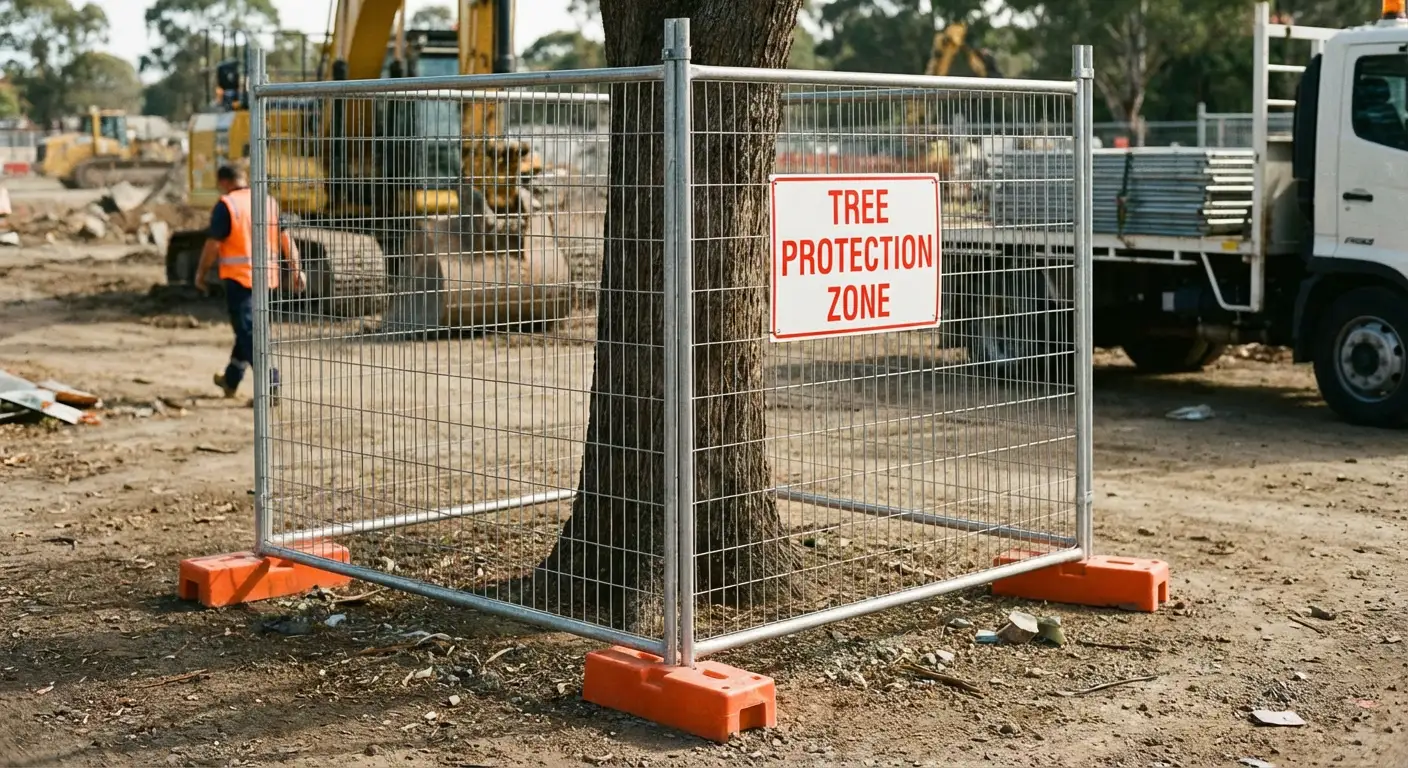
Root Zone Calculation for Temporary Perimeter Zones
Precise technical guidance for establishing compliant temporary fencing root zones in Valencia construction environments with accurate measurement protocols.
OSHA-aligned technical standards for secure temporary fencing installations across Santa Clarita Valley