Valencia Physical Fencing vs Electronic Surveillance: Site Security
In Valencia, CA, construction sites in neighborhoods like Valencia Town Center and Bridgeport require careful consideration of physical fencing versus electronic surveillance. SCV Perimeter Rentals provides expert guidance on when physical barriers are legally mandated for liability and safety. With Valencia's upscale communities and commercial areas like the Hyatt Regency, choosing the right security solution is crucial for compliance and protection.
Physical Security Boundaries: Electronic vs. Traditional Fencing Solutions
We've been installing perimeter solutions around Valencia since 2008, and one thing remains consistent: every site needs a tailored security approach. Physical fencing isn't just about creating a barrier — it's about establishing a clear, immediate visual deterrent. Chain link panels provide instant visibility and structural integrity, while electronic systems rely on detection after potential breaches. Our Old Orchard and Creekside clients understand that a solid fence stops intrusion before it happens, whereas cameras merely document an incident. The key is layered security: robust physical boundaries complemented by strategic surveillance technology.
-
Evaluate site-specific security requirements
-
Assess perimeter vulnerability zones
-
Compare detection vs. physical prevention methods
-
Calculate long-term maintenance costs
-
Review local Valencia zoning regulations

Physical Fencing vs Electronic Surveillance: Which Secures Valencia Sites Best?
Comparing solid fencing and tech surveillance for secure job sites in Valencia’s neighborhoods.
Electronic Surveillance Enhances Security at Valencia Town Center
Best Practices for Old Orchard’s Residential and Business Sites
Secure Your Valencia Site with Trusted Perimeter Solutions
SCV Perimeter Rentals offers reliable fencing and surveillance options.
Physical Fencing vs Electronic Surveillance for Valencia Site Security
Physical fencing blocks access first; electronic surveillance records activity and supports response across Valencia sites.
| Excluded Service | Reason for Exclusion | Alternative Provider |
|---|---|---|
|
Temporary chain link fencing
|
Creates a visible physical barrier that controls entry points, protects materials, and slows casual trespassing around active Valencia sites. |
Use along open perimeters near pedestrian traffic.
|
|
Access gate panels
|
Restricts vehicle and worker movement better than cameras alone, especially where deliveries, staging, and after-hours closure must stay organized. |
Pair with lockable openings and clear signage.
|
|
Privacy screening
|
Reduces sightlines into equipment yards, limiting opportunistic theft and discouraging loitering where electronic surveillance only records activity. |
Add where stored materials need concealment.
|
|
Motion camera coverage
|
Provides documentation and remote awareness, but it does not physically stop intrusion, making it strongest as a layered layer. |
Use to monitor fence lines and gates.
|
|
Alarmed perimeter sensors
|
Delivers immediate alerts when someone breaches a boundary, yet performance depends on response speed and backup barriers. |
Install after fencing, not as replacement.
|
Why steel beats pixels for perimeter security in Valencia
After 15 years seeing cameras fail when stakes are highest—whether it's vandals cutting wires or dust storms obscuring lenses—we trust physical barriers first. Electronic systems have their place, but nothing stops a determined intruder like 11-gauge steel chain-link anchored with 200lb concrete bases. Our Valencia crews install fences that withstand 70mph winds because we've watched lesser barriers blow over onto equipment.
-
1
Physical deterrence
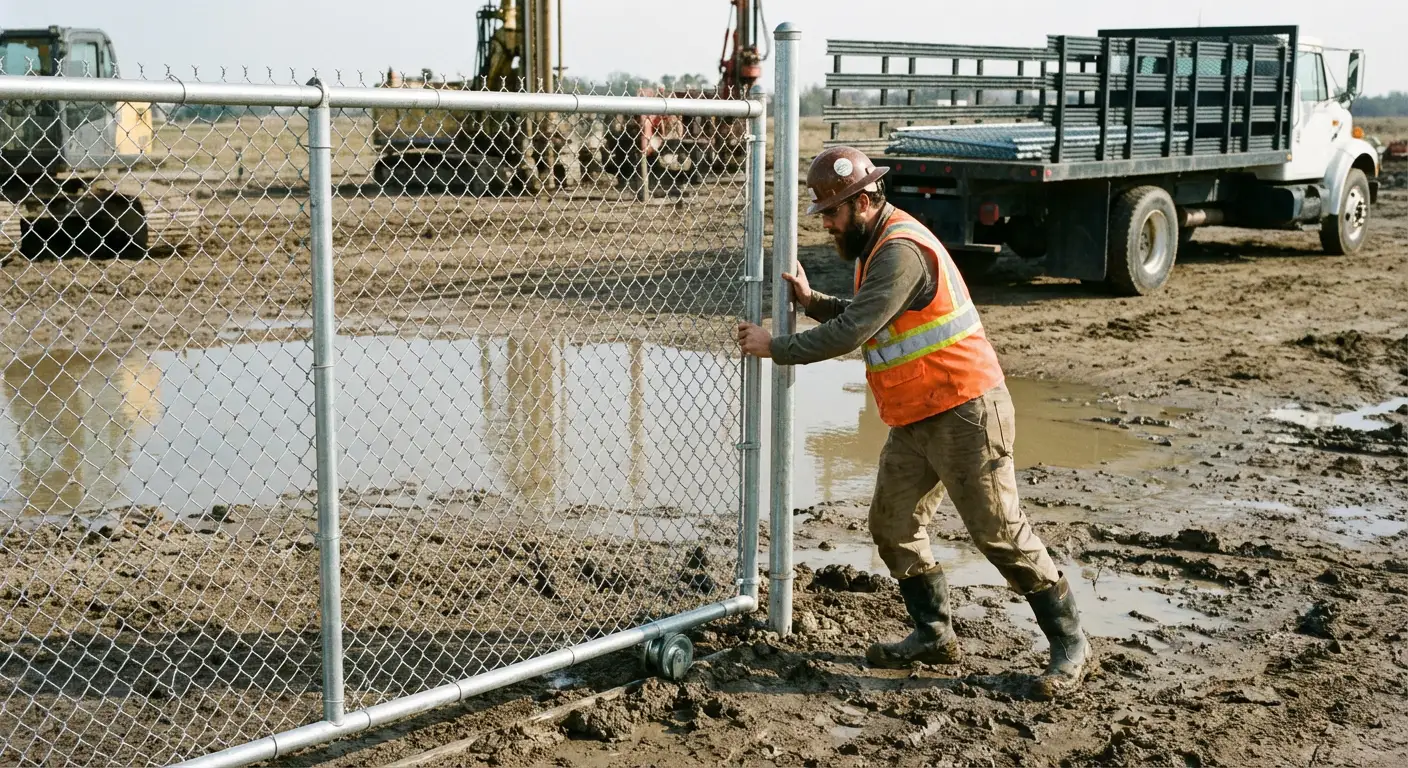
A chain-link fence provides immediate visual and physical barriers that discourage unauthorized access before it even happens.
Real World ExampleOur 8-foot construction fences around Valencia Country Club stopped multiple trespass attempts during the golf tournament setup.
-
2
No power dependency
Unlike surveillance systems that fail during outages, fencing works 24/7 without electricity or maintenance crew intervention.
Real World ExampleWhen the Santa Ana winds knocked out power in Creekside last winter, our barriers stayed fully operational.
-
3
Clear boundary definition
Fences eliminate gray areas about property lines, which reduces disputes with neighbors or construction crews.
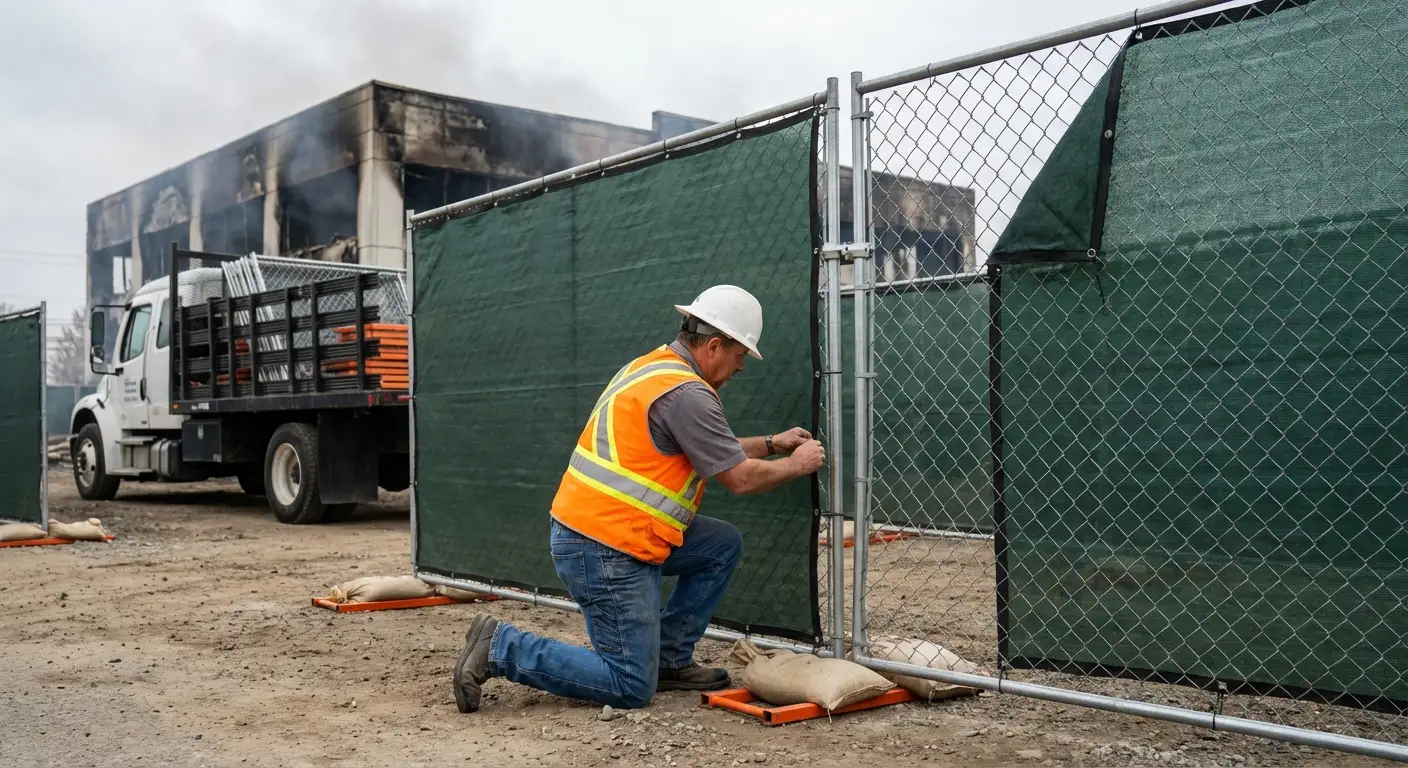
Real World ExampleWe used orange vinyl privacy screens to mark the exact perimeter for that Summit housing project near the wildfire zone.
-
4
Immediate installation
Our crew can secure a half-acre site with drive-on post bases faster than electricians can run conduit for cameras.
Real World ExampleHad Old Orchard's community center up and running within 4 hours after their break-in last month.
Every fence we install comes from hard lessons learned protecting SCV job sites since 2008
Physical Fencing vs Electronic Surveillance: What Works Best for Your Valencia Site?
After working around Valencia’s neighborhoods like Valencia Town Center and The Summit (Valencia Summit), I’ve seen firsthand how physical fencing and electronic surveillance each play a role in site security. Physical fences act as the first line of defense—visible and tough to bypass—especially important near busy spots like the Santa Clarita Performing Arts Center. But alone, fences can’t catch everything. That’s where electronic surveillance steps in with eyes on the site 24/7, capturing activity and alerting crews if something’s off. We get fences up fast with options like post-driven fences that stand strong through Valencia’s weather swings. Meanwhile, pairing fences with cameras covers blind spots and adds a layer of evidence collection. For most projects, a mix of both methods keeps things locked down tight.
Site Assessment Checklist
- Physical fencing provides a visible, tangible barrier that deters unauthorized access immediately.
- Electronic surveillance offers real-time monitoring and remote response capabilities.
- Combining fencing with cameras enhances site security by covering blind spots.
- Fencing requires proper installation and maintenance to withstand weather and tampering.
- Surveillance systems depend on reliable power and network connections.
- Physical barriers slow down intruders, giving security personnel time to react.
- Electronic surveillance can document incidents for evidence and investigation.
- Consider site-specific needs like location, foot traffic, and local crime rates.
- Temporary fencing solutions adapt well to construction sites and events.
- Both systems have upfront costs but differ in ongoing operational expenses.
Physical Fencing vs Electronic Surveillance in Valencia
Compare physical fencing and electronic surveillance options for effective site security in Valencia, CA.
Serving Valencia businesses with compliant perimeter solutions.
Physical Barriers and Electronic Monitoring Comparison
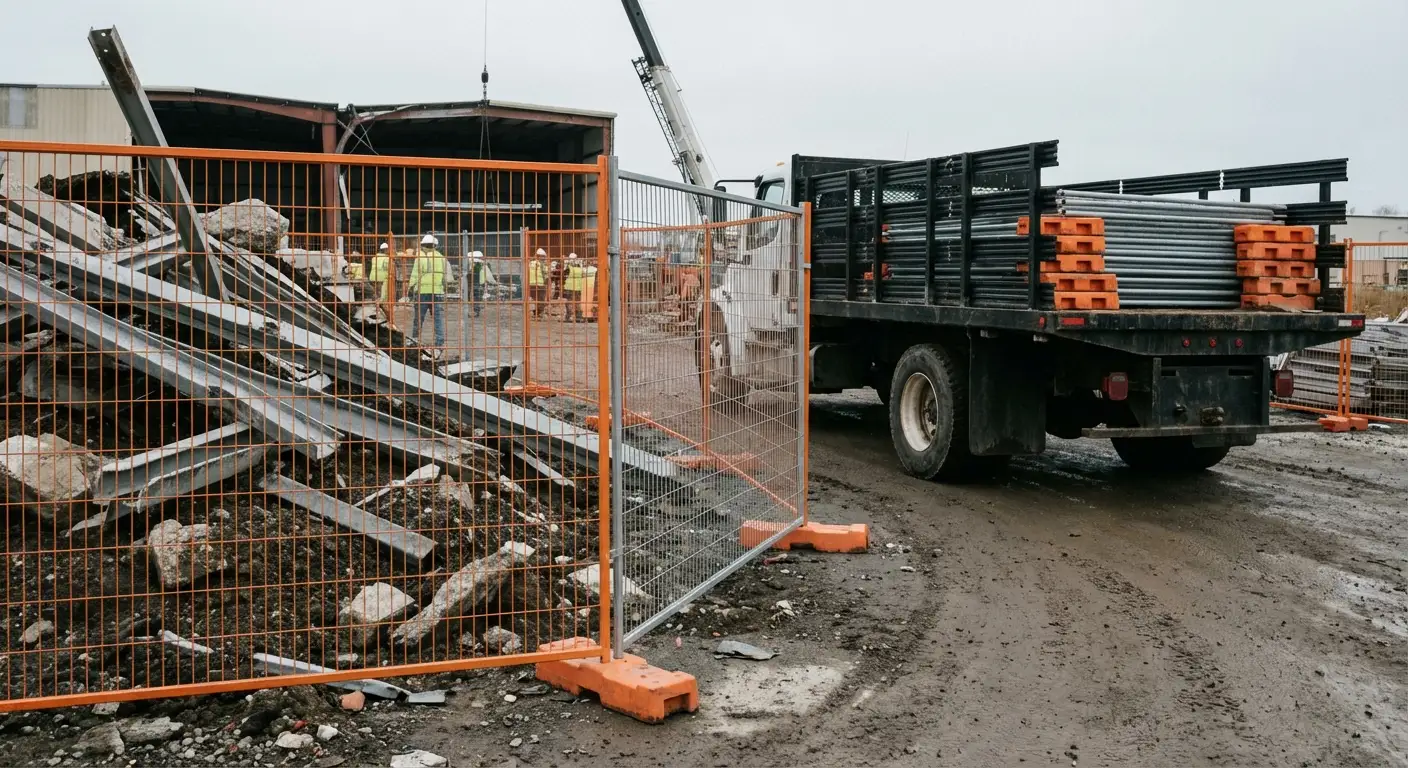
Field technicians compare physical fencing capabilities against electronic sensor limitations for secure site management across Valencia, CA locations.
How does physical fencing affect site access near Valencia Town Center?
Chain link barriers establish hard boundaries for construction sites near Valencia Town Center. These structures prevent unauthorized entry where electronic sensors fail due to heavy foot traffic or signal interference from surrounding commercial infrastructure.
Does electronic surveillance work in Old Orchard residential zones?
Motion sensors face challenges in Old Orchard due to local wildlife and wind. Physical perimeter fencing provides a constant visual deterrent that electronic systems lack when operating in established residential village environments.
What prevents sensor failure in The Summit area?
Electronic systems lose effectiveness during heavy rain or dust storms common in The Summit. Physical fencing maintains a continuous line of sight and a tangible barrier that does not require power or signal strength.
Why combine barriers in Creekside developments?
Creekside terrain requires physical fencing to manage slope stability and boundary lines. Electronic surveillance serves as a secondary notification layer, but the fence provides the primary containment required by local site safety standards.
How do 1980-2000 era buildings impact security setups?
Spanish Colonial structures from the 1980-2000 era often have specific setback requirements. Physical fencing ensures compliance with property lines, whereas electronic systems only monitor movement without preventing physical trespass on these specific lots.
Which method meets OSHA site perimeter requirements?
OSHA standards for construction sites prioritize physical barriers to prevent accidental entry into work zones. Electronic surveillance acts as an alert mechanism, but it does not satisfy the requirement for a tangible site boundary.